Installing electrical conduit through existing concrete floors or walls requires specialized cutting equipment and careful planning. Whether you're upgrading electrical systems, renovating commercial spaces, or installing new equipment,
professional concrete cutting for electrical conduit in Glendale, AZ, helps create accurate pathways while minimizing unnecessary demolition.
With over 25 years of industry experience,
Adam's Concrete Cutting and Demolition provides concrete cutting services for residential, commercial, and industrial projects throughout Glendale and the West Valley.
Why Electrical Projects Require Concrete Cutting
Electrical contractors often need to modify existing concrete when installing or upgrading electrical infrastructure. Professional concrete cutting creates controlled openings for conduit without removing more concrete than necessary.
Common applications include:
- Underground electrical conduit installation
- Concrete trench cutting for electrical pathways
- Commercial electrical system upgrades
- Wall and floor penetrations
- Warehouse and industrial equipment connections
- Commercial tenant improvements
Hiring a specialized concrete cutting contractor allows electricians to focus on electrical installation while experienced crews handle the cutting and removal work.
Concrete Cutting Methods for Electrical Conduit
Different electrical projects require specific cutting techniques depending on the concrete surface, opening size, and installation requirements.
Concrete Trench Cutting
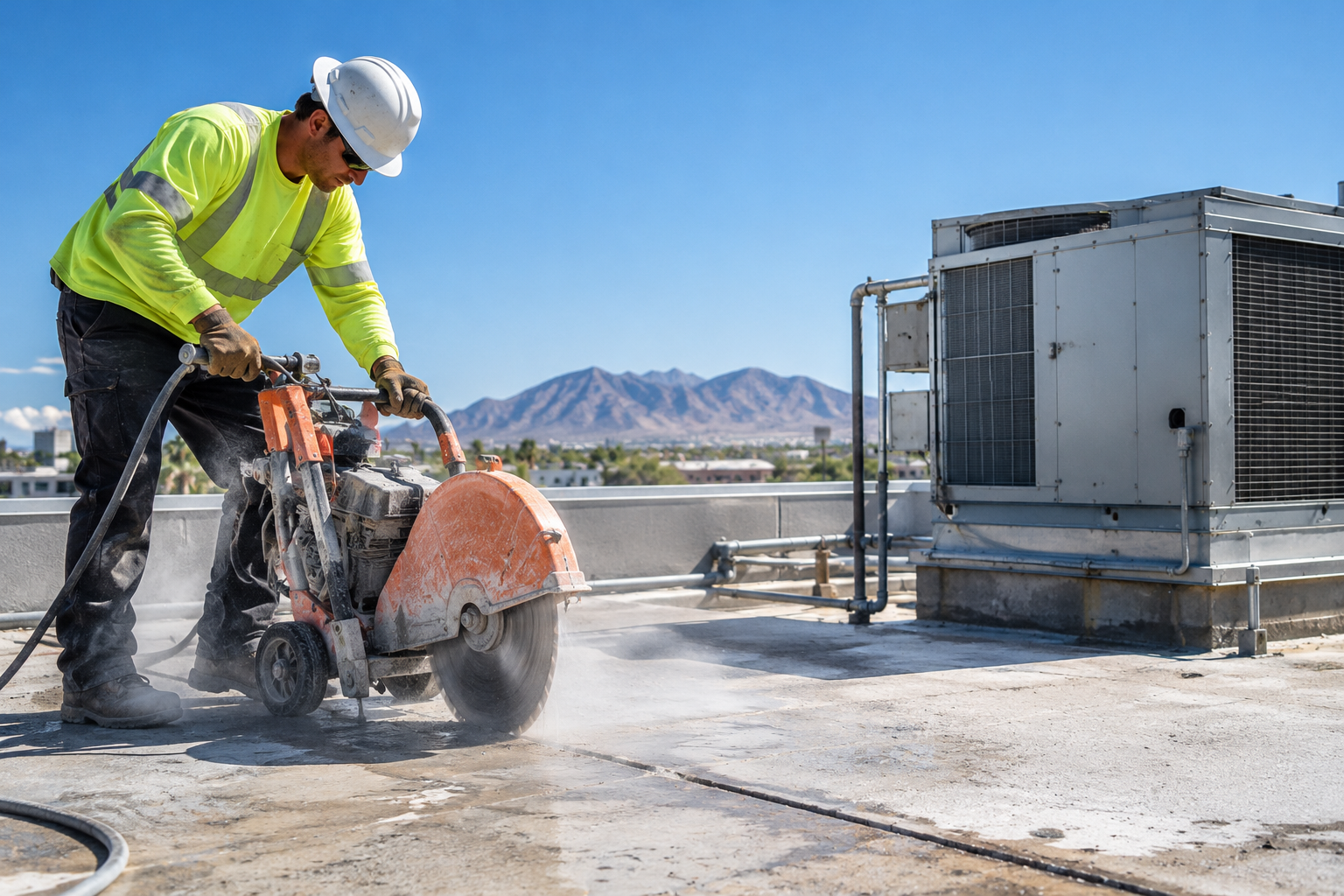
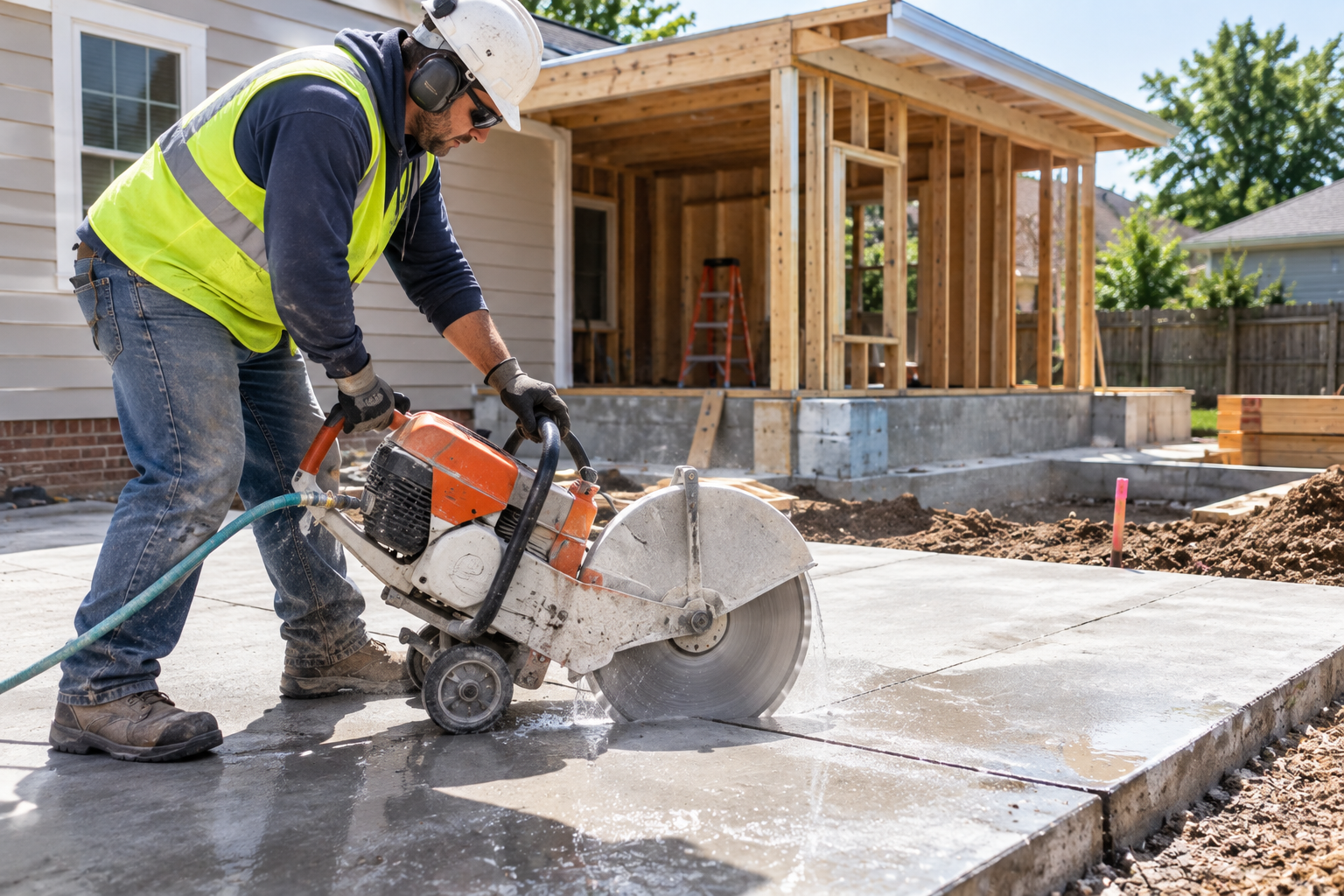
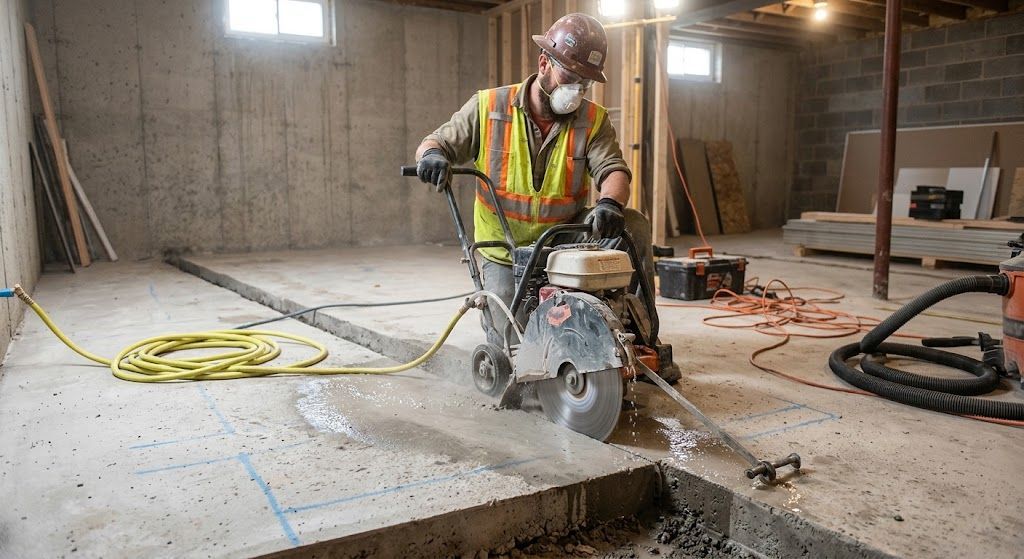
Concrete trench cutting creates pathways beneath existing slabs for electrical conduit. Contractors use concrete saws to establish precise trench boundaries before removing designated concrete sections.
This method is commonly used for commercial renovations, warehouse upgrades, and underground electrical installations.
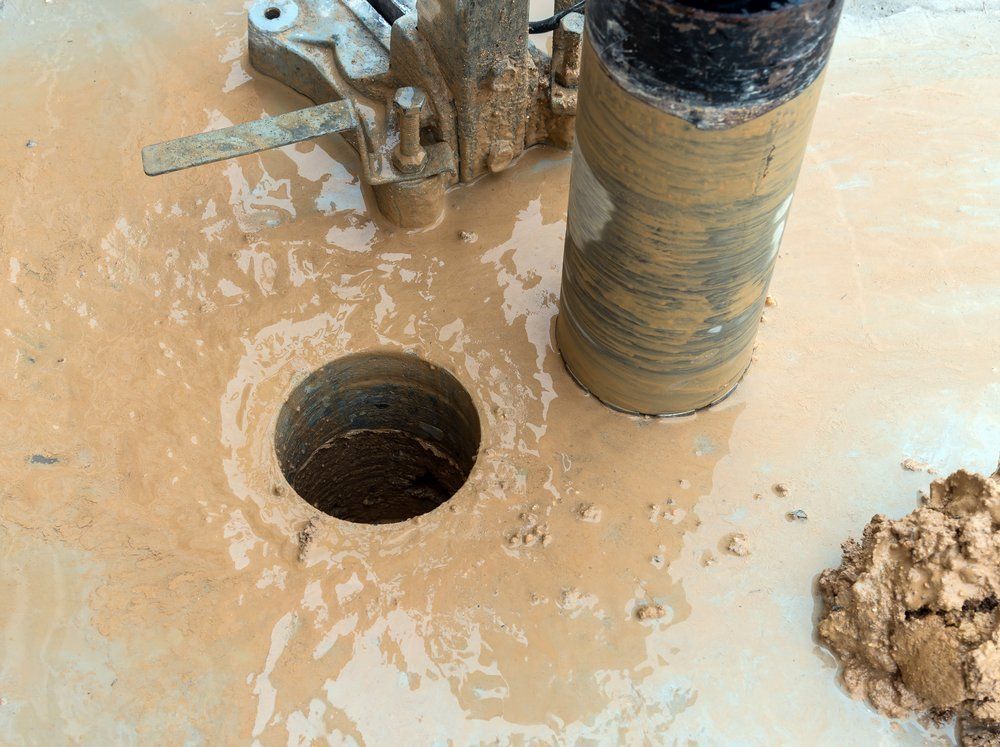
Core Drilling
Core drilling creates circular openings through concrete floors and walls. It is ideal for conduit penetrations, utility connections, and electrical equipment installations requiring accurately sized holes.
Wall Sawing
Wall sawing creates controlled openings in vertical concrete surfaces. It is useful for larger electrical penetrations that cannot be completed through standard core drilling.
Structural walls must be evaluated and any necessary modifications approved by the responsible design professional before cutting.
Flat Sawing
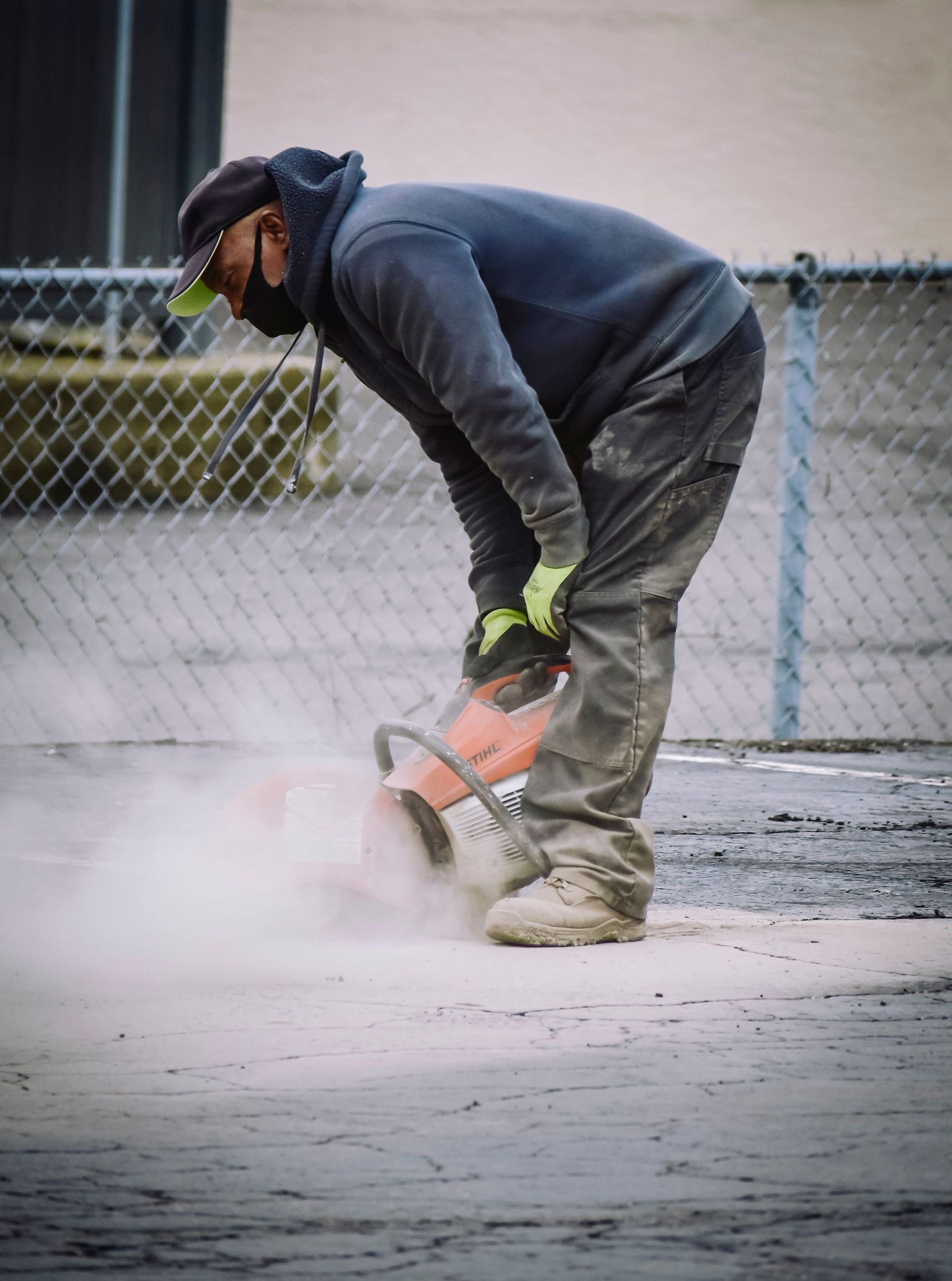
Flat sawing is commonly used on concrete floors and slabs to create straight cuts for conduit trenches and selective concrete removal.
How Concrete Cutting for Electrical Conduit Works
A successful project requires coordination between electrical contractors, general contractors, and concrete cutting specialists.
1. Review the Electrical Layout
The project team identifies the conduit route, required trench dimensions, and penetration locations based on approved plans.
2. Inspect the Concrete
Before cutting, the work area should be evaluated for reinforcing steel, post-tension tendons, plumbing, and existing electrical utilities.
3. Select the Cutting Method
The contractor determines whether flat sawing, trench cutting, core drilling, or wall sawing is appropriate for the approved scope.
4. Cut and Remove Concrete
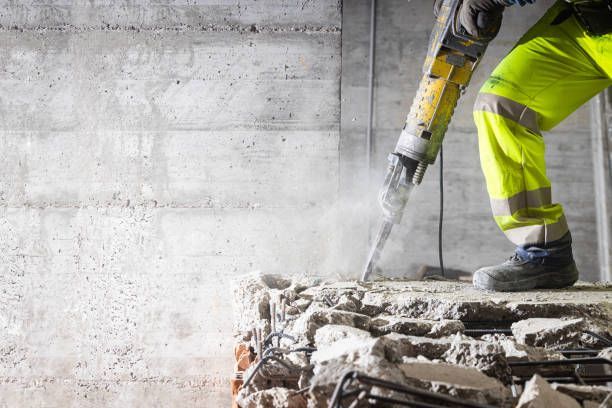
Specialized equipment creates the required openings. Designated concrete sections are removed according to project requirements.
5. Prepare for Electrical Installation
Once the concrete work is complete, electricians can install the conduit. Concrete restoration is coordinated separately according to the construction plans.
Concrete Cutting for Commercial and Industrial Projects
Electrical upgrades often require concrete modifications in existing buildings. Professional cutting services support projects involving:
- Commercial tenant improvements: Creating new conduit pathways for renovated offices, restaurants, and retail spaces.
- Warehouse electrical upgrades: Preparing trenches and penetrations for machinery, charging infrastructure, and electrical systems.
- Industrial facilities: Creating concrete openings for equipment connections and utility installations.
- Commercial renovations: Modifying existing slabs and walls to accommodate updated electrical layouts.
Scheduling concrete cutting before electrical installation helps minimize delays and improves coordination between trades.
Safety Considerations Before Cutting Concrete
Existing concrete may contain hidden utilities, reinforcing steel, or structural components. Cutting without proper evaluation can cause damage and create safety hazards.
Important precautions include identifying embedded utilities, checking for post-tension systems, confirming structural requirements, and implementing appropriate dust controls.
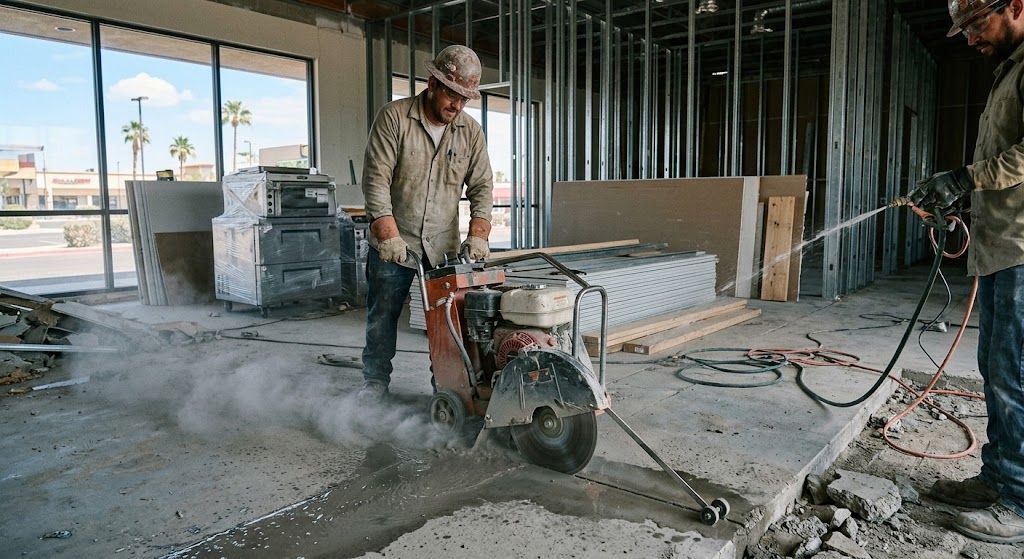
Indoor cutting projects also require planning for noise, debris removal, equipment access, and nearby occupants.
For silica dust safety requirements, refer to OSHA's Respirable Crystalline Silica Standard for Construction.
How to Request a Concrete Cutting Estimate
Providing accurate project information helps contractors evaluate the scope and prepare an estimate.
Useful details include:
- Project location and building type
- Concrete slab or wall thickness, if known
- Required trench dimensions or penetration sizes
- Construction plans and site photographs
- Accessibility and scheduling requirements
- Concrete removal and debris disposal needs
Clear communication before work begins helps prevent unnecessary delays and additional cutting.
Concrete Cutting Services in Glendale and the West Valley
Adam's Concrete Cutting and Demolition serves contractors and property owners throughout
Glendale, Peoria, Surprise, Avondale, Goodyear, Phoenix, Sun City, El Mirage, and surrounding West Valley communities.
Whether your project requires electrical conduit trench cutting, concrete core drilling, or selective demolition, professional cutting services help prepare the site for efficient electrical installation.
Frequently Asked Questions
Can concrete be cut for underground electrical conduit?
Yes. Concrete trench cutting creates access beneath existing slabs for underground conduit installation based on approved electrical plans.
What is the best concrete cutting method for electrical conduit?
The method depends on the project. Trench cutting is commonly used for underground conduit, while core drilling creates circular penetrations through concrete walls and floors.
Can concrete cutting be performed inside commercial buildings?
Yes. Indoor concrete cutting requires appropriate planning for dust control, noise, equipment access, and debris removal.
Who determines where the concrete should be cut?
Electrical contractors, general contractors, and relevant design professionals establish the required conduit routes and dimensions. Concrete cutting specialists perform the approved cutting work.
Why Choose Adam's Concrete Cutting and Demolition?
With more than 25 years of industry experience,
Adam's Concrete Cutting and Demolition provides specialized concrete cutting and demolition services for residential, commercial, and industrial projects.
Services include concrete slab cutting, flat sawing, trench cutting, core drilling, wall sawing, concrete removal, and selective demolition.
The company works with electrical contractors, general contractors, and property managers to create the concrete access needed for electrical installations and renovations.
Get Professional Concrete Cutting in Glendale, AZ
Need concrete cutting for electrical conduit, commercial electrical upgrades, or industrial equipment installations?
Adam's Concrete Cutting and Demolition provides specialized concrete cutting services throughout Glendale and the West Valley.
Contact the team to discuss your project and request an estimate.