When a plumbing problem or renovation involves pipes beneath a concrete slab, getting access to those lines can be one of the most challenging parts of the project. Pipes may be buried beneath garage floors, home foundations, commercial floors, patios, or other concrete surfaces. Simply breaking through the slab without a plan can create unnecessary damage and make the repair more difficult.
That is where professional concrete cutting for plumbing comes into the project.
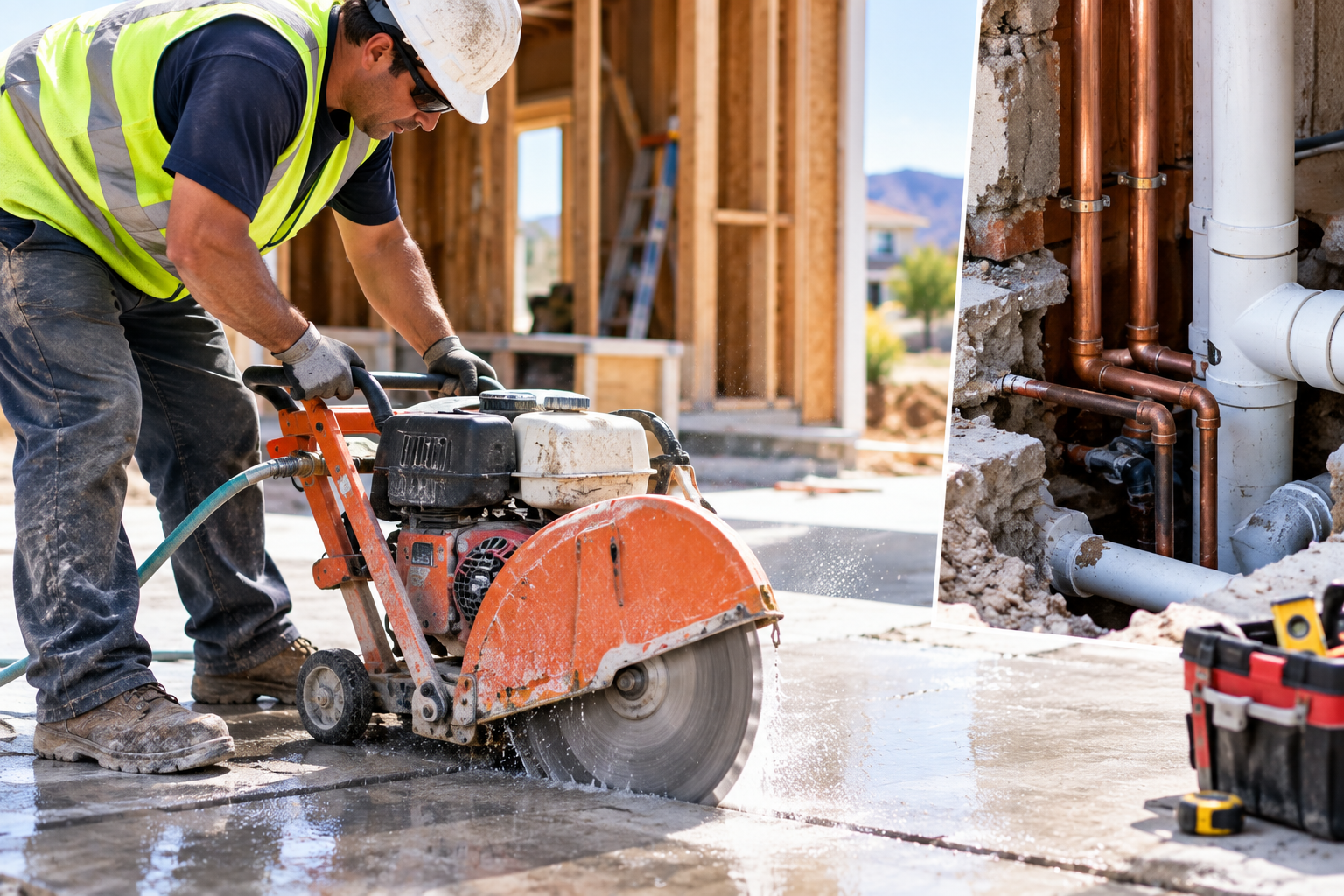
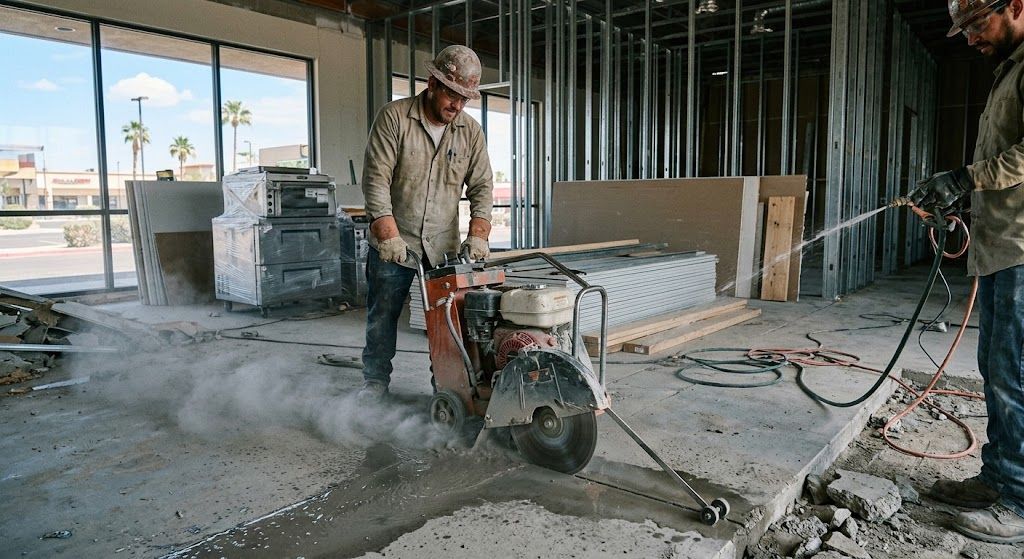
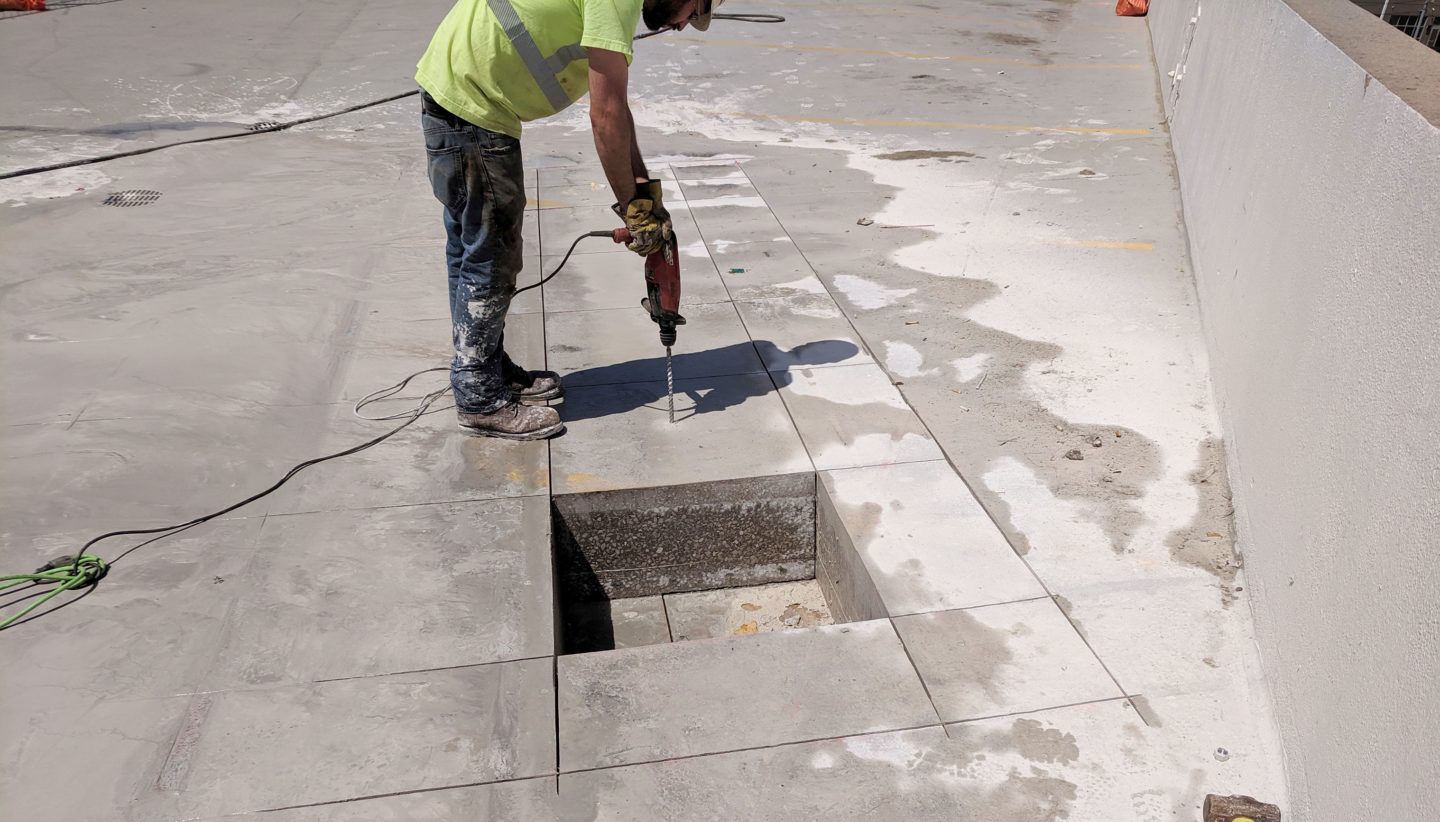
Concrete saw cutting allows a contractor to create a controlled opening or trench through the slab so a plumber can reach the area below. Compared with uncontrolled demolition, precision cutting can create cleaner edges, limit the amount of concrete that needs to be removed, and make it easier to restore the slab after the plumbing work is complete.
At Adam’s Concrete Cutting and Demolition, we work with homeowners, plumbers, general contractors, property managers, and commercial clients throughout Glendale and surrounding West Valley communities. Whether the project involves a bathroom remodel, damaged drain line, new kitchen plumbing, or commercial tenant improvement, proper concrete cutting can help the plumbing phase move forward efficiently.
Here is what property owners and contractors should know before cutting a concrete slab for plumbing.
When Is Concrete Cutting Needed for Plumbing?
Not every plumbing repair requires concrete removal. When pipes are located inside walls, ceilings, crawlspaces, or accessible utility areas, plumbers may be able to reach them without disturbing a slab.
However, many Arizona properties are built on concrete slab foundations. If plumbing runs underneath that slab, access may require cutting through the concrete.
Common projects include:
- Relocating a toilet
- Installing a walk-in shower
- Adding a bathroom
- Moving a kitchen sink
- Installing plumbing for a kitchen island
- Repairing an under-slab drain line
- Replacing damaged sewer piping
- Adding floor drains
- Installing plumbing in a garage conversion
- Remodeling a restaurant kitchen
- Adding commercial plumbing fixtures
The objective is not to remove more concrete than necessary. A properly planned trench gives the plumber enough working space while helping preserve the surrounding slab.
How Does Concrete Slab Cutting for Plumbing Work?
A successful project typically involves coordination between the concrete cutting contractor and the plumber or general contractor.
1. Determine the Plumbing Route
Before cutting begins, the plumbing contractor determines where the new or existing line needs to run.
The route may depend on factors such as:
- Location of the existing sewer connection
- Required drain slope
- Fixture placement
- Pipe diameter
- Existing plumbing layout
- Building plans
Accurate planning at this stage helps avoid unnecessary cutting later.
2. Evaluate the Concrete
The cutting contractor needs to understand what type of slab is involved.
Important considerations can include:
- Slab thickness
- Reinforcement
- Post-tension construction
- Existing utilities
- Accessibility
- Indoor versus outdoor conditions
This information helps determine the appropriate cutting equipment and approach.
3. Identify Potential Hazards
Concrete can hide more than plumbing.
Depending on the property, the slab may contain or cover:
- Rebar
- Post-tension tendons
- Electrical conduit
- Existing water lines
- Other utilities
For projects where embedded hazards may be present, additional investigation or scanning may be appropriate before cutting begins.
This is particularly important with post-tension construction because cutting a tensioned tendon can create a serious safety and structural problem.
4. Mark the Trench
Once the plumbing route is finalized, the trench is marked on the concrete.
Instead of randomly breaking the slab, the cutting crew creates defined boundaries for removal.
5. Saw Cut the Concrete
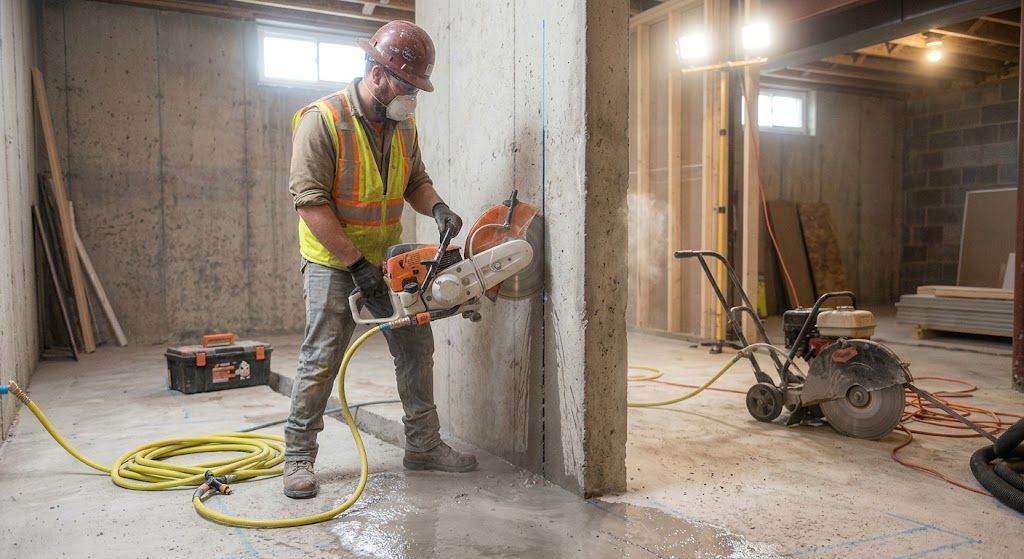
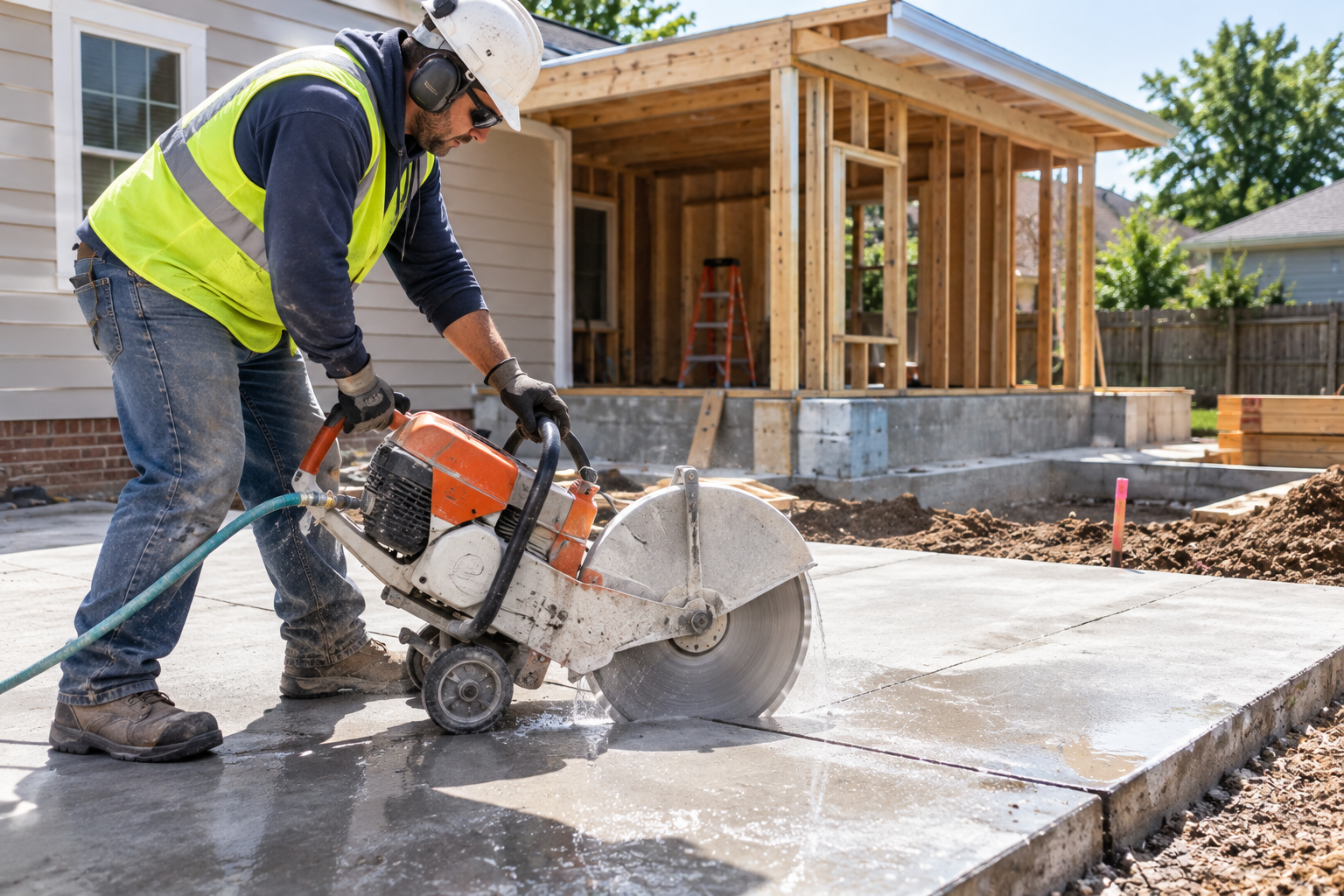
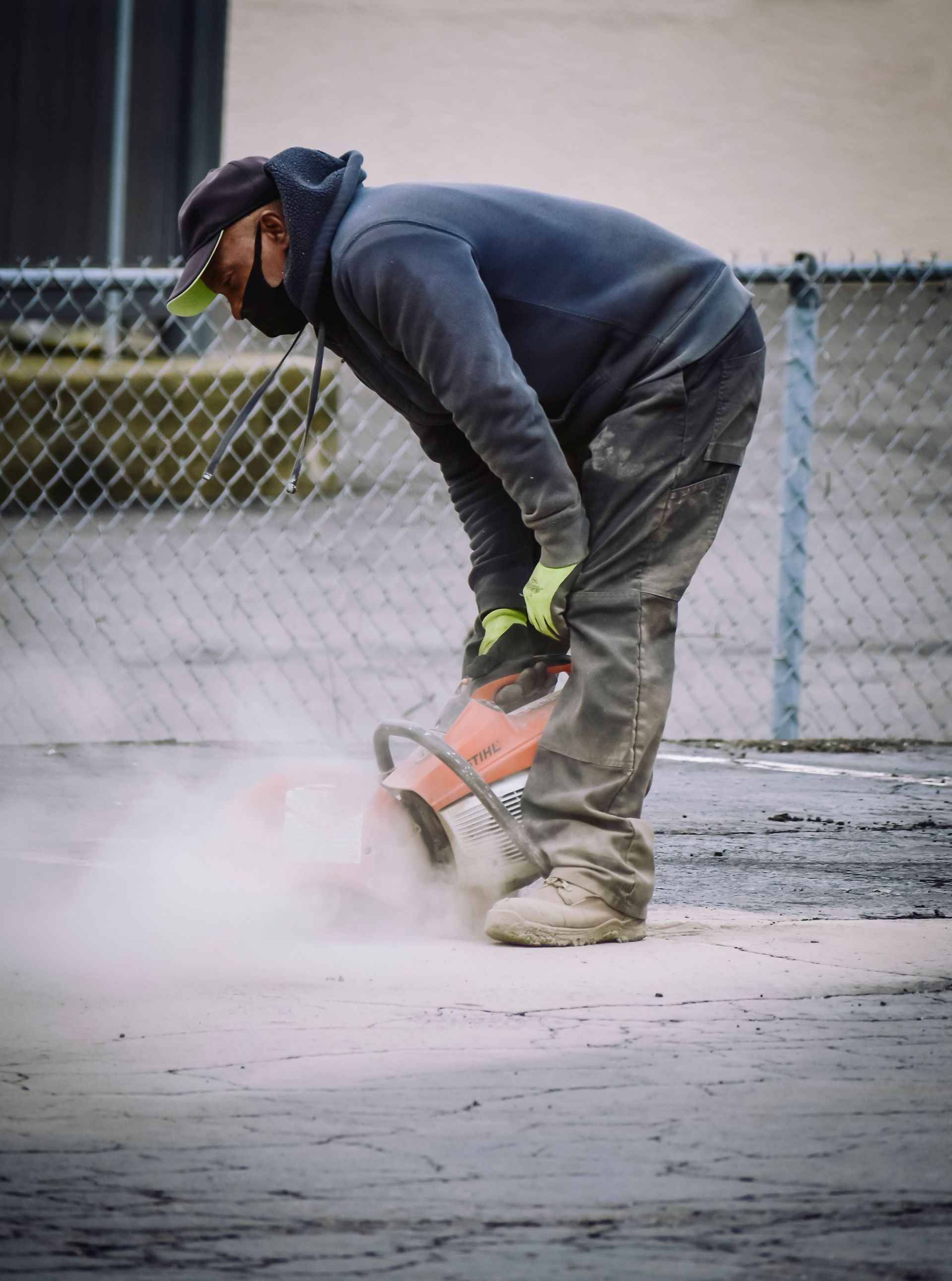
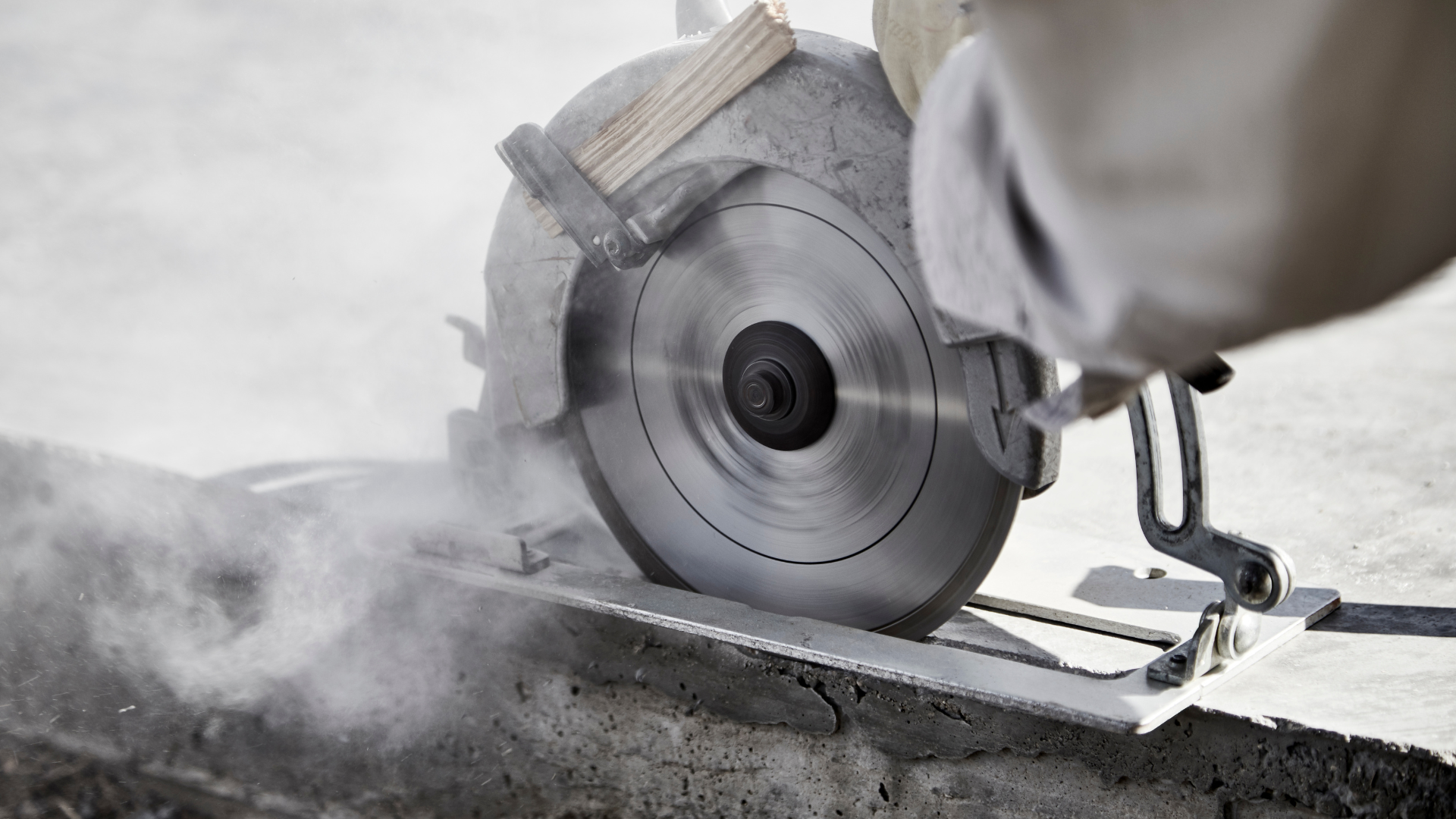
Professional diamond-blade equipment is used to cut along the marked lines.
For horizontal slabs, flat sawing or other appropriate concrete saw cutting equipment may be used depending on the location, access, and required depth.
The result is a controlled opening with much cleaner edges than would typically be produced by beginning with a jackhammer alone.
6. Remove the Concrete
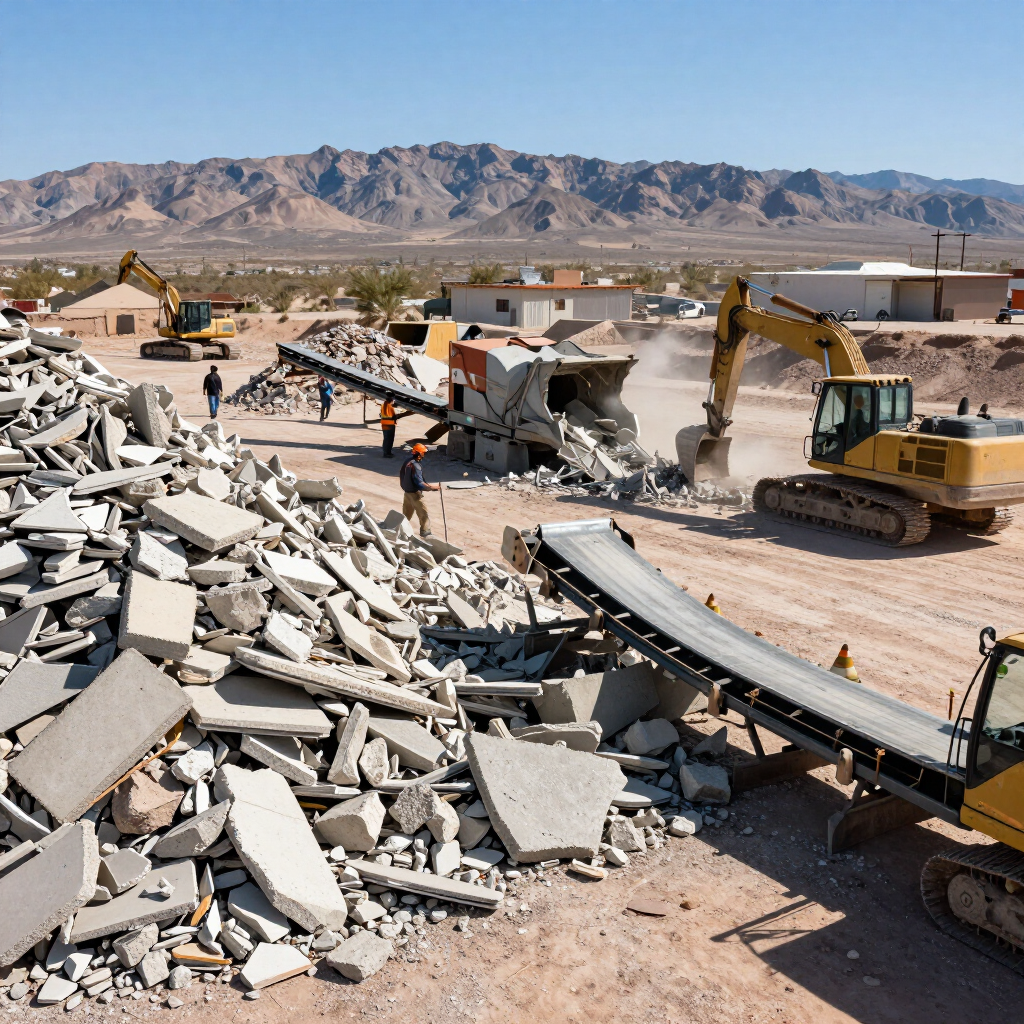
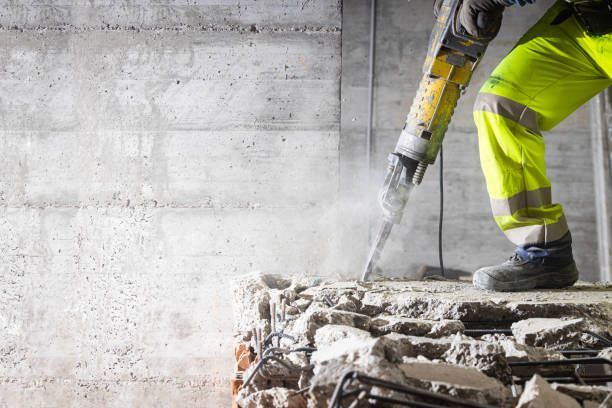
After the boundaries have been cut, the concrete within the trench can be broken into manageable sections and removed.
The plumber can then excavate the material beneath the slab and access the plumbing system.
Why Not Just Use a Jackhammer?
A jackhammer has an important role in demolition, but it is not always the best tool for defining the edges of a plumbing trench.
If a crew starts breaking concrete without first establishing controlled boundaries, vibration can contribute to unwanted cracking or chipping outside the intended work area.
Saw cutting first provides several advantages.
Cleaner Edges
Straight trench edges make the eventual concrete repair easier to manage.
More Controlled Removal
Only the required portion of the slab needs to be opened.
Less Unnecessary Damage
Precision cuts help separate the removal area from concrete that needs to remain.
Better Coordination
The plumber knows exactly where the access trench begins and ends.
In many projects, saw cutting and breaking are both used. The difference is that each tool is used for the task it performs best.
Concrete Cutting for Bathroom Remodels
Bathroom remodeling is one of the most common reasons homeowners need slab cutting.
Changing a bathroom layout can involve relocating:
- Toilets
- Showers
- Bathtubs
- Vanities
- Floor drains
Moving a toilet or shower drain is considerably different from changing a faucet or replacing a vanity. The drain connection may be located beneath the slab, meaning the floor has to be opened to reroute the plumbing.
For example, a Glendale homeowner converting an older bathtub area into a larger walk-in shower may need a different drain location. Depending on the plumbing configuration, the contractor may need a trench between the existing drain system and the new fixture location.
Precision cutting gives the plumbing crew the access needed without unnecessarily demolishing the rest of the bathroom floor.
Kitchen Remodels Can Require Slab Cutting Too
Kitchen remodeling can also create under-slab plumbing challenges.
One common example is adding a large kitchen island with a sink.
If the new island is located far from the original plumbing wall, the contractor may need to run new lines beneath the floor. On a slab-on-grade property, that can require concrete trench cutting.
Concrete cutting may also be necessary when:
- Relocating the kitchen sink
- Reconfiguring the entire kitchen
- Repairing damaged drain piping
- Adding plumbing during a major addition
Planning the route before cabinetry and flooring are installed is essential. It is much easier to perform concrete work during the rough construction phase than after expensive finishes have been completed.
What About Under-Slab Plumbing Repairs?
Concrete cutting is not limited to remodeling.
Sometimes the plumbing itself fails beneath the slab.
Potential under-slab problems can include damaged drain lines, deteriorated piping, or other plumbing failures that require direct access.
Once the plumber has diagnosed the problem and identified the repair location, a concrete cutting contractor can create the necessary access opening.
A targeted approach is important because the objective is to expose the problem—not demolish an entire room.
This is one reason coordination between trades matters so much. The plumbing contractor determines where access is needed, and the concrete cutting crew creates that access as precisely as possible.
Concrete Cutting for Commercial Plumbing Projects
Commercial projects can be even more demanding.
Restaurants, retail spaces, medical offices, warehouses, and other commercial properties may need extensive plumbing changes when a new tenant moves into an existing building.
Imagine converting a former retail store into a restaurant. The new business may require:
- Multiple floor sinks
- Kitchen drains
- Restroom plumbing
- Handwashing sinks
- Equipment connections
- Additional water lines
That can mean multiple trenches through an existing commercial slab.
Careful cutting allows the plumbing contractor to install the new infrastructure while helping the general contractor maintain control over the renovation schedule.
For businesses in Glendale, Peoria, Phoenix, and nearby areas, minimizing unnecessary demolition can also help reduce disruption to neighboring tenants and other areas of the property.
Indoor Concrete Cutting Requires Extra Planning
Cutting a slab inside a finished or partially finished building requires additional attention to the work environment.
Important considerations include:
- Dust control
- Water or slurry management
- Equipment access
- Nearby finished surfaces
- Occupied areas
- Noise
- Ventilation
- Debris removal
Professional crews select cutting and containment methods appropriate for the site rather than treating an indoor bathroom remodel like an outdoor driveway demolition.
Before work begins, homeowners can help by removing furniture, personal belongings, and other objects from the immediate work area. Contractors should also coordinate access and determine how debris will be transported out of the building.
What Happens After the Plumbing Is Installed?
Concrete cutting is only one phase of the project.
Once the trench is open, the plumber can:
- Excavate to the required depth.
- Install or repair the piping.
- Test the plumbing as appropriate.
- Complete any required inspections.
- Prepare the trench for backfilling.
After the plumbing work is approved and complete, the trench must be properly restored according to the project requirements.
The exact restoration method depends on the structure, trench, soil conditions, and applicable construction requirements.
This is another reason the original cuts matter. Clean boundaries give the contractor a clearly defined area to work with during restoration.
Common Mistakes to Avoid When Cutting Concrete for Plumbing
Cutting Before the Plumbing Layout Is Final
Changing the pipe route after the slab has already been cut can mean additional demolition, labor, and repair.
Finalize the route first.
Assuming Nothing Else Is in the Slab
A concrete floor can contain reinforcement or embedded systems that are invisible from above.
Never assume the path is clear simply because the surface looks uncomplicated.
Removing Too Much Concrete
Bigger is not automatically better. Unnecessary removal increases demolition, hauling, and restoration work.
Ignoring Post-Tension Construction
Post-tension slabs require special consideration. Cutting without identifying tendon locations can create serious hazards.
Failing to Coordinate Trades
The plumber, general contractor, and concrete cutting contractor should agree on the cut location and dimensions before work starts.
Good communication can prevent expensive changes later.
How to Prepare for Concrete Cutting During a Plumbing Project
Before the concrete cutting crew arrives, make sure the scope is clearly established.
Helpful preparation includes:
- Finalizing fixture locations
- Confirming the plumbing route
- Clearing the work area
- Providing building plans when available
- Identifying access restrictions
- Discussing debris removal
- Coordinating with the plumber and general contractor
- Addressing potential scanning or utility-location needs
The more information available before cutting starts, the easier it is to execute the work efficiently.
Frequently Asked Questions About Concrete Cutting for Plumbing
Do plumbers cut concrete themselves?
Some plumbing companies may perform limited concrete work, but specialized concrete cutting contractors have equipment designed specifically for precise slab cutting and removal. On larger or more complex projects, plumbers and concrete cutting contractors often work together.
Can you cut concrete for a new bathroom?
Yes. Concrete cutting is commonly used to create access for drain and plumbing lines when bathrooms are added or relocated in slab-on-grade buildings.
Can a kitchen island sink require concrete cutting?
Yes. If the plumbing needs to travel beneath an existing slab to reach the island, trench cutting may be required.
Is concrete cutting better than jackhammering for plumbing trenches?
The methods often work together. Saw cutting establishes clean boundaries, while breaking equipment can help remove concrete within those boundaries. Starting with precision cuts provides better control over the removal area.
Can you cut concrete inside an occupied building?
Depending on the project, concrete cutting can be performed indoors with appropriate equipment, containment, access planning, and cleanup procedures. Commercial projects may also be scheduled to minimize disruption.
Why Choose Adam’s Concrete Cutting and Demolition?
Concrete cutting for plumbing requires more than simply owning a saw. The cutting crew needs to understand how its work fits into the larger construction or repair project.
Adam’s Concrete Cutting and Demolition brings more than 25 years of industry experience to residential, commercial, and industrial projects throughout the Glendale area.
Our concrete services include:
- Flat sawing
- Concrete slab cutting
- Concrete trench cutting
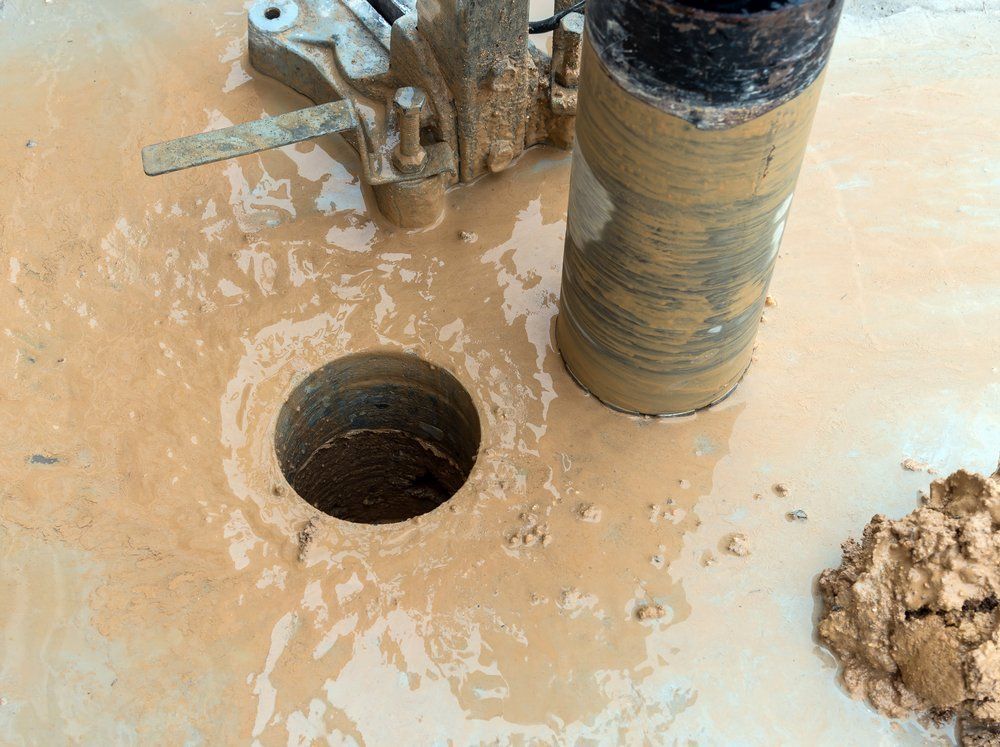
- Core drilling
- Wall sawing
- Concrete removal
- Demolition
Whether you're a homeowner remodeling a bathroom or a contractor preparing a commercial building for an entirely new plumbing layout, our goal is to provide clean, controlled concrete work that helps keep the next phase moving.
Schedule Concrete Cutting for Your Plumbing Project in Glendale, AZ
If your plumbing project requires access beneath a concrete slab, don't start breaking concrete without a plan.
Professional concrete cutting can create the controlled access your plumber needs while minimizing unnecessary removal and protecting surrounding areas.
Adam’s Concrete Cutting and Demolition serves homeowners, plumbers, builders, and commercial contractors throughout Glendale, Peoria, Surprise, Avondale, Goodyear, Phoenix, and surrounding West Valley communities.
Call (623) 444-4195 or email concretecutting@live.com to discuss your project and request an estimate.
Whether you're adding a bathroom, relocating a kitchen, repairing an under-slab drain, or completing a commercial renovation, Adam’s Concrete Cutting and Demolition is ready to help you open the slab accurately and get the project moving.