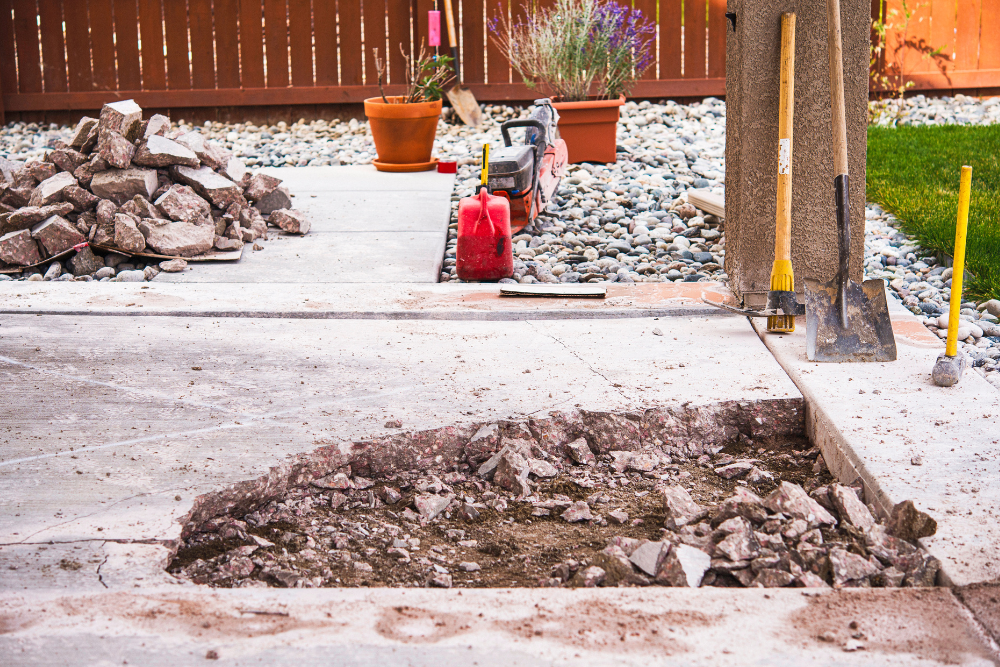
Not all concrete slabs are created equal. Many homes, commercial buildings, and parking structures in Glendale and throughout the Phoenix metro area are built using
post-tension concrete slabs. If you’re planning to cut, drill, or remove part of a slab, failing to identify post-tension cables first can lead to serious structural damage — and serious safety risks.
At Adam’s Concrete Cutting and Demolition, we regularly work on post-tension slabs across residential and commercial properties. This guide explains what post-tension concrete is, why it’s used, and why you should never attempt to cut it without proper scanning and professional expertise.
What Is Post-Tension Concrete?
Post-tension concrete is a reinforced slab system that uses high-strength steel cables (called tendons) embedded inside the concrete. After the concrete cures, these cables are tensioned (tightened) to place the slab under compression.
This compression:
- Increases structural strength
- Reduces cracking
- Allows for thinner slabs
- Supports heavier loads
- Spans longer distances without beams
Post-tension slabs are commonly used in:
- Residential home foundations
- Multi-family housing
- Office buildings
- Parking garages
- Retail centers
- Warehouses
In Arizona, post-tension foundations became especially popular in the 1990s and 2000s due to soil movement concerns and cost efficiency.
Why Cutting Post-Tension Concrete Is Dangerous
Cutting into a post-tension slab without knowing cable locations can result in:
1. Cable “Blowout”
Post-tension cables are under extreme tension. If cut, the cable can snap violently, causing:
- Serious injury
- Structural damage
- Slab failure
- Costly repairs
This is not a minor mistake — it’s potentially catastrophic.
2. Structural Compromise
Even if a cable doesn’t snap violently, cutting one can:
- Reduce slab load capacity
- Create cracks across the foundation
- Require engineered repairs
- Void warranties or insurance coverage
3. Expensive Repairs
Repairing a damaged post-tension cable often requires:
- Breaking open the slab
- Installing splice kits
- Engineering inspections
- City approval
- Re-pouring sections of concrete
Costs can range into the thousands — sometimes far more than the original cutting job.
How to Identify a Post-Tension Slab
Here are common indicators:
- A stamp on the garage floor reading “Post Tension Slab – Do Not Cut or Drill”
- Plastic caps along the slab edge
- Construction built after the early 1990s
- Engineering documentation referencing tensioned cables
However, visual signs are not enough. The safest method is
concrete scanning using Ground Penetrating Radar (GPR).
The Safe Process for Cutting Post-Tension Concrete
At Adam’s Concrete Cutting and Demolition, we follow a strict protocol:
Step 1: GPR Scanning
We scan the slab to locate:
- Post-tension cables
- Rebar
- Electrical conduit
- Plumbing lines
All tendons are marked clearly on the surface.
Step 2: Engineer Coordination (If Required)
For structural cuts, we coordinate with:
- Structural engineers
- General contractors
- City inspectors
In some cases, partial de-tensioning may be required before cutting.
Step 3: Precision Cutting
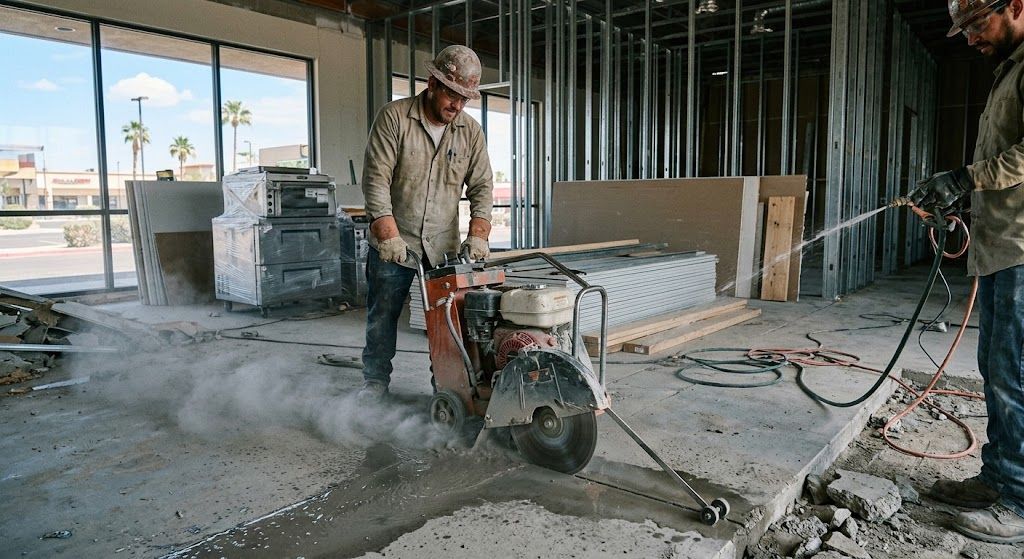
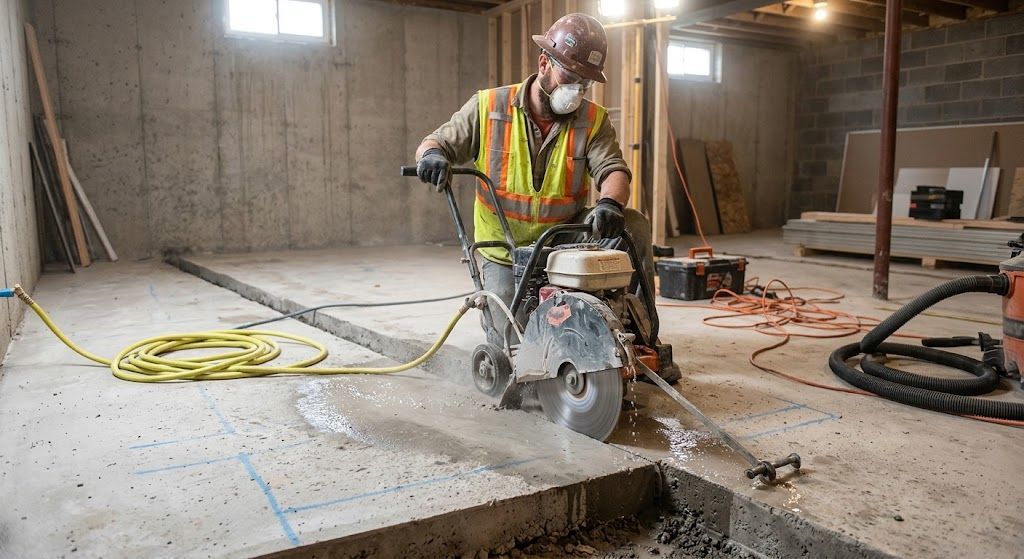
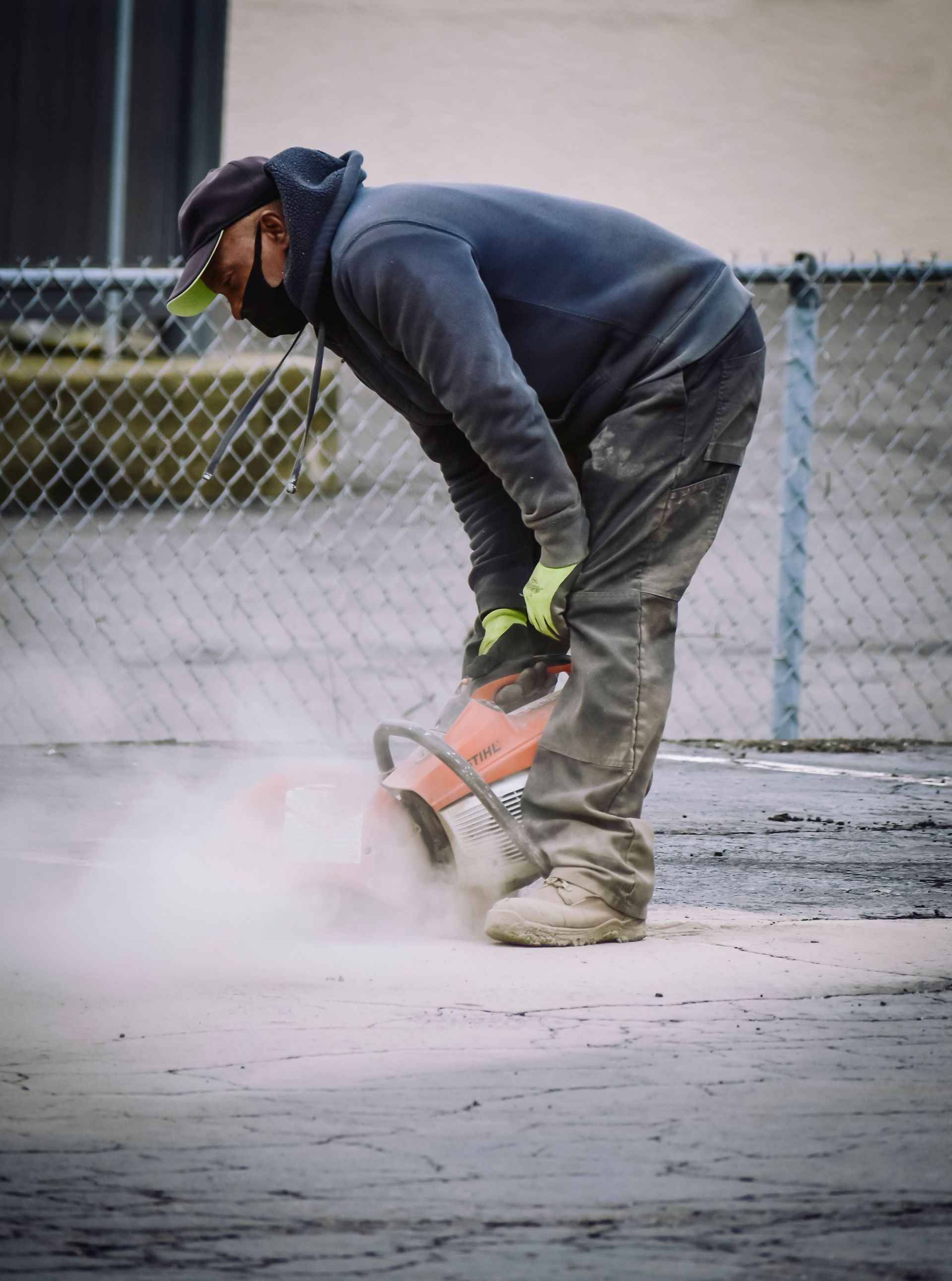
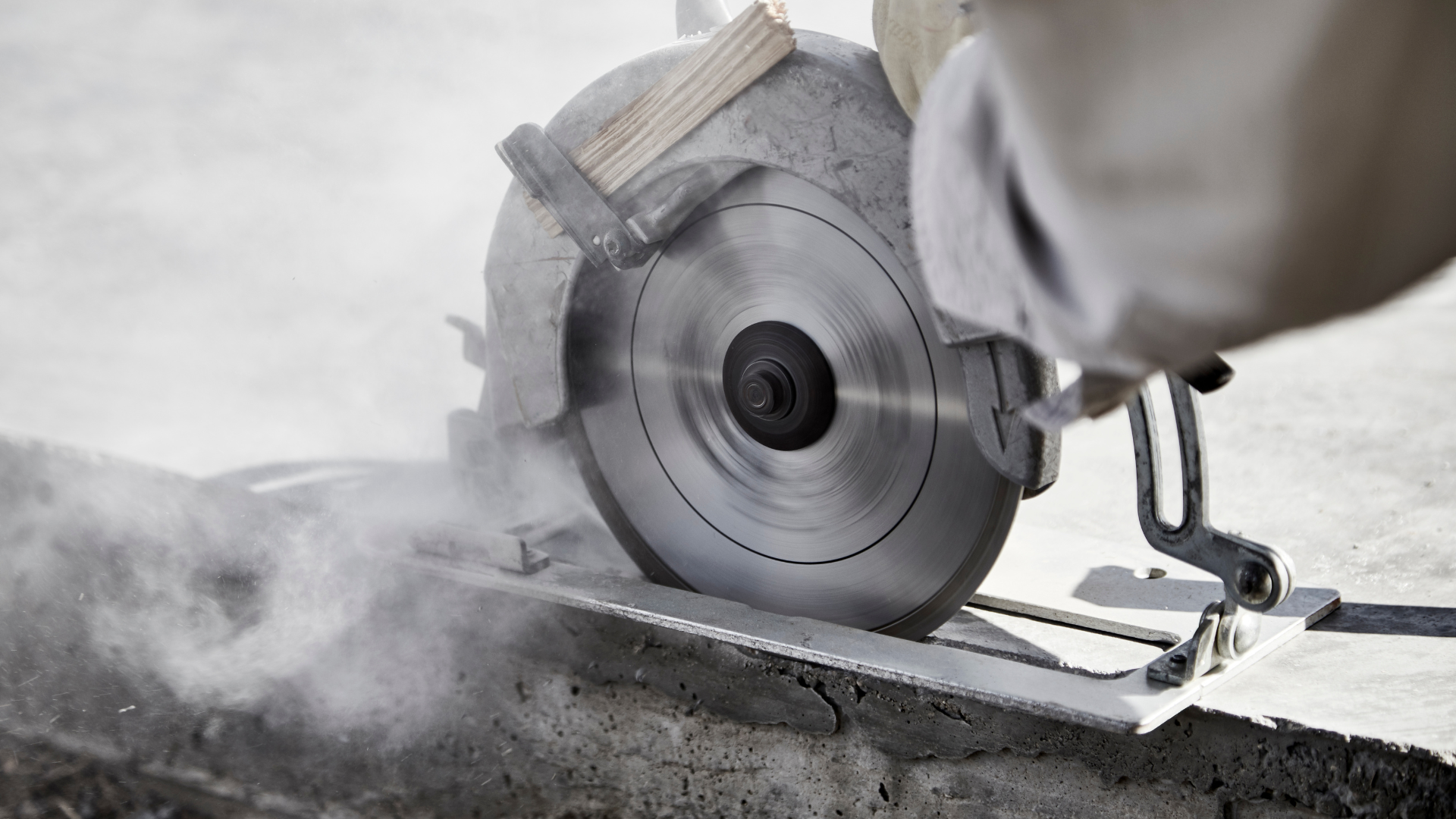
We use depth-controlled diamond saws to avoid contacting tendons. Every cut is measured and monitored carefully.
Step 4: Section Removal & Cleanup
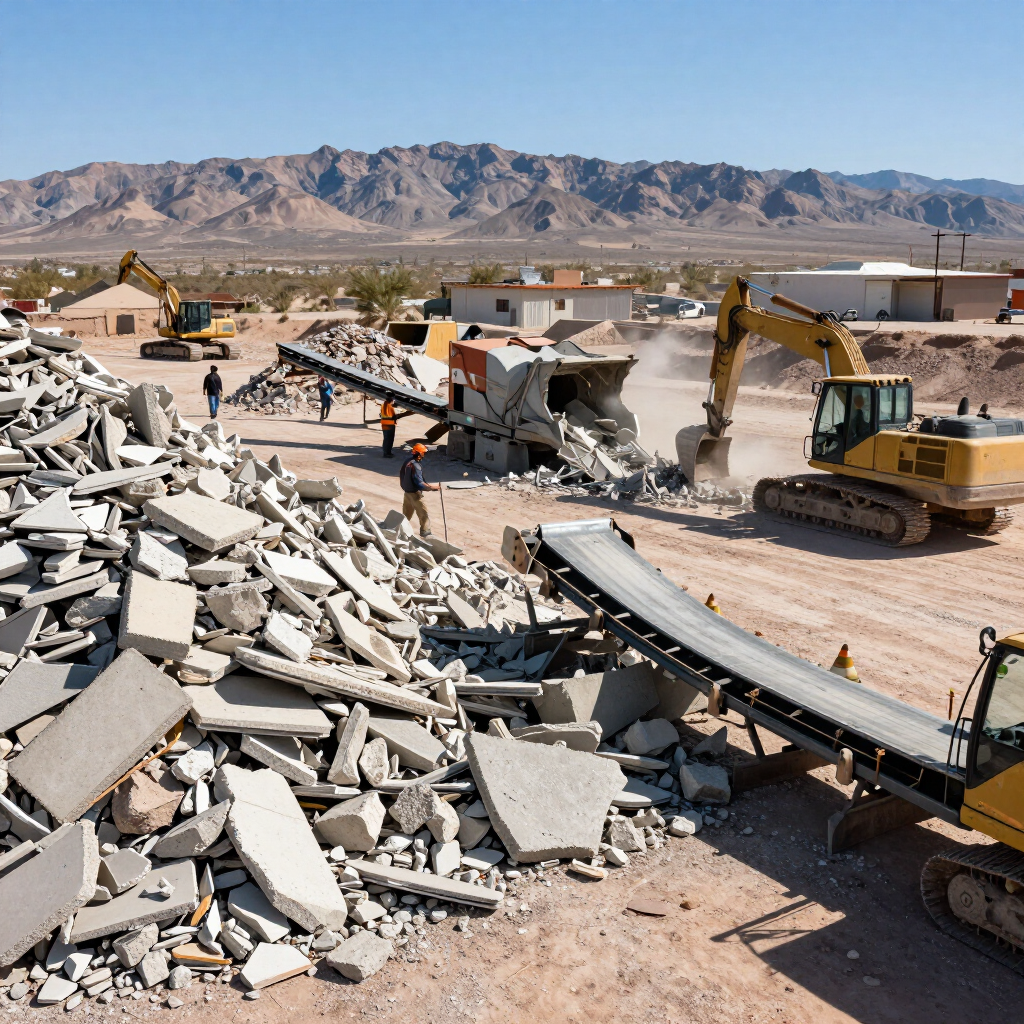
Once cuts are complete, slab sections are removed safely without disturbing adjacent structural components.
Common Projects That Involve Post-Tension Slabs
We frequently see post-tension slabs involved in:
- Kitchen remodels requiring plumbing relocation
- Bathroom expansions
- Garage conversions
- Commercial tenant improvements
- Utility trenching
- Equipment anchoring in warehouses
Any of these projects require extreme caution if the building uses post-tension construction.
FAQs About Post-Tension Concrete Cutting
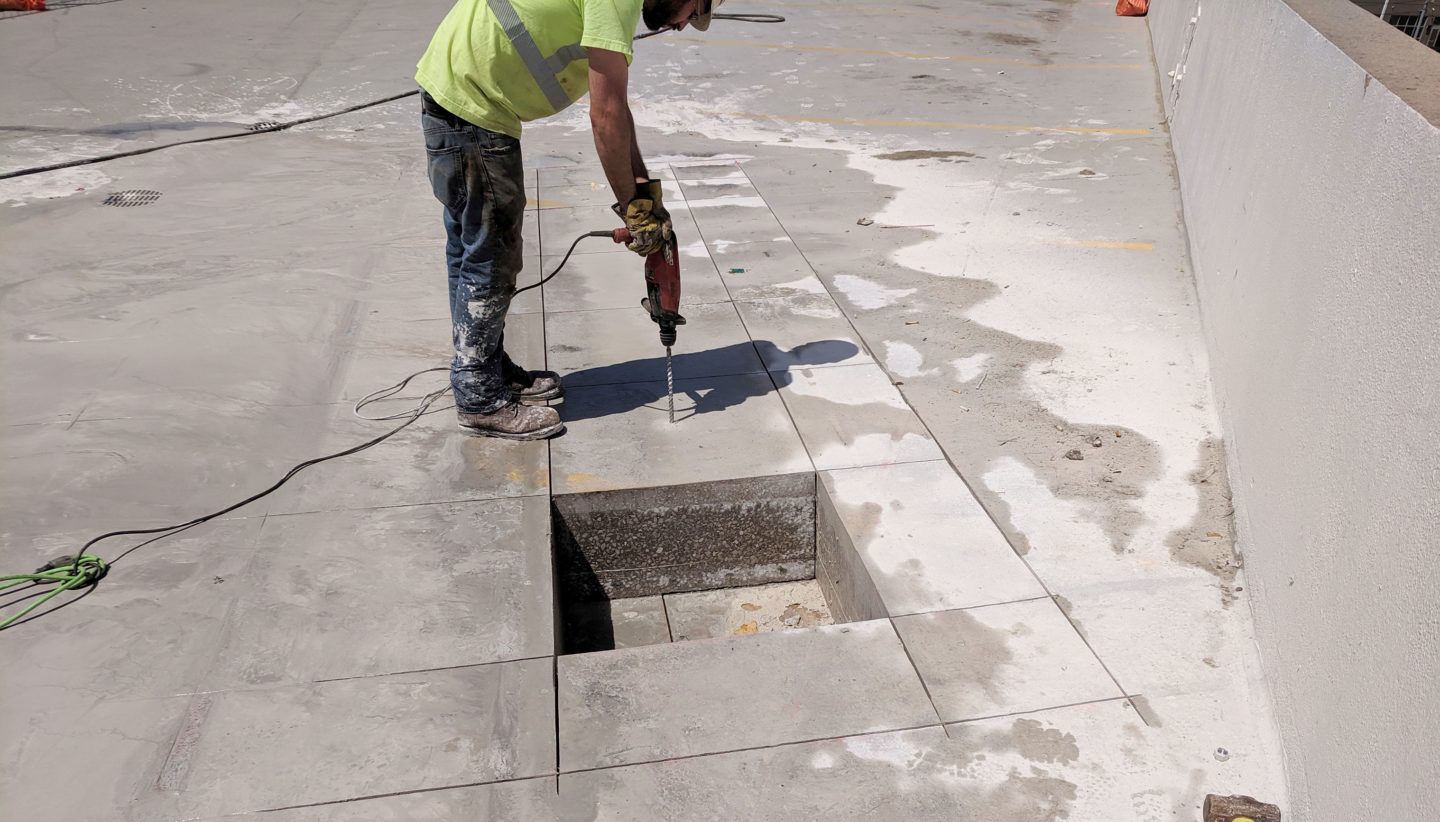
Can I drill small holes into a post-tension slab?
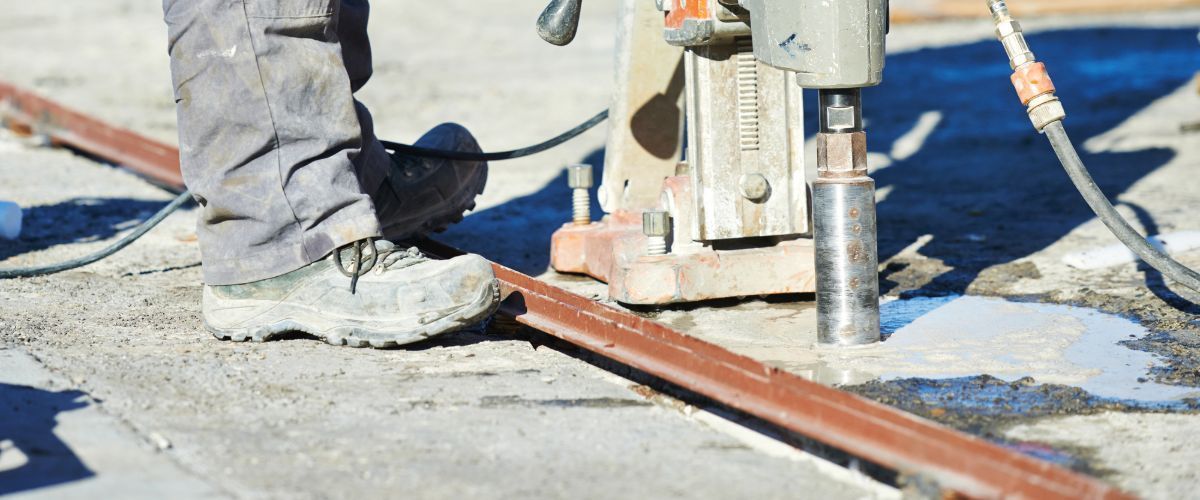
Even small holes can hit cables. Always scan before drilling.
Is it illegal to cut a post-tension slab?
Not illegal — but unsafe without proper evaluation. Some cuts require engineering approval.
How much does scanning cost?
Typically a few hundred dollars — far less than repairing a damaged tendon.
Can damaged tendons be repaired?
Yes, but repairs are expensive and require specialized structural procedures.
Are most homes in Glendale post-tensioned?
Many homes built after the 1990s use post-tension slabs, especially in master-planned communities.
Real Example: Avoiding a Major Repair in Surprise, AZ
A homeowner in Surprise planned to relocate plumbing for a kitchen remodel. Before cutting, they contacted Adam’s for scanning. Our GPR scan revealed multiple post-tension cables directly beneath the proposed trench line.
We adjusted the cut location slightly and avoided three tendons. Without scanning, the homeowner could have faced thousands in repair costs and significant project delays.
Why Choose Adam’s Concrete Cutting for Post-Tension Work?
- 25+ years of experience in Arizona construction
- Licensed & insured (AZ ROC #249502)
- Professional GPR scanning services
- Depth-controlled cutting equipment
- Residential and commercial expertise
We understand the risks and take every precaution to protect your property.
Don’t Risk It — Call Before You Cut
If you suspect your slab may be post-tensioned, do not drill, cut, or trench without professional evaluation.
Serving Glendale, Peoria, Surprise, Phoenix & surrounding areas
Call (623) 444-4195
Email: concretecutting@live.com
Protect your home or business. Trust experienced professionals for post-tension concrete cutting.